
The Clock That Wants Your Phone Off the Nightstand (And Honestly? It Has a Point.)
Balmuda and Jony Ive's design studio LoveFrom have built the most beautiful case yet for a phone-free bedroom — a handless, aluminum alarm clock that tells time in light, wakes you in soundscapes, and costs $373. We are fully persuaded.
Balmuda
Let's be honest about something. The phone on your nightstand is not doing you any favors. You know this. I know this. The sleep researchers have written the papers. The wellness industry has built an empire on it. And yet, every night, there it is — face-down in a performative gesture of restraint, screen glowing through the fabric anyway, one notification away from pulling you back in at 2 a.m. We keep it there because the alternatives have been, until recently, deeply uninspiring. A $12 alarm clock from the drugstore that sounds like a fire drill. A smart speaker that makes your bedroom feel like a call center. A watch you're supposed to sleep with, apparently. None of it is the answer.
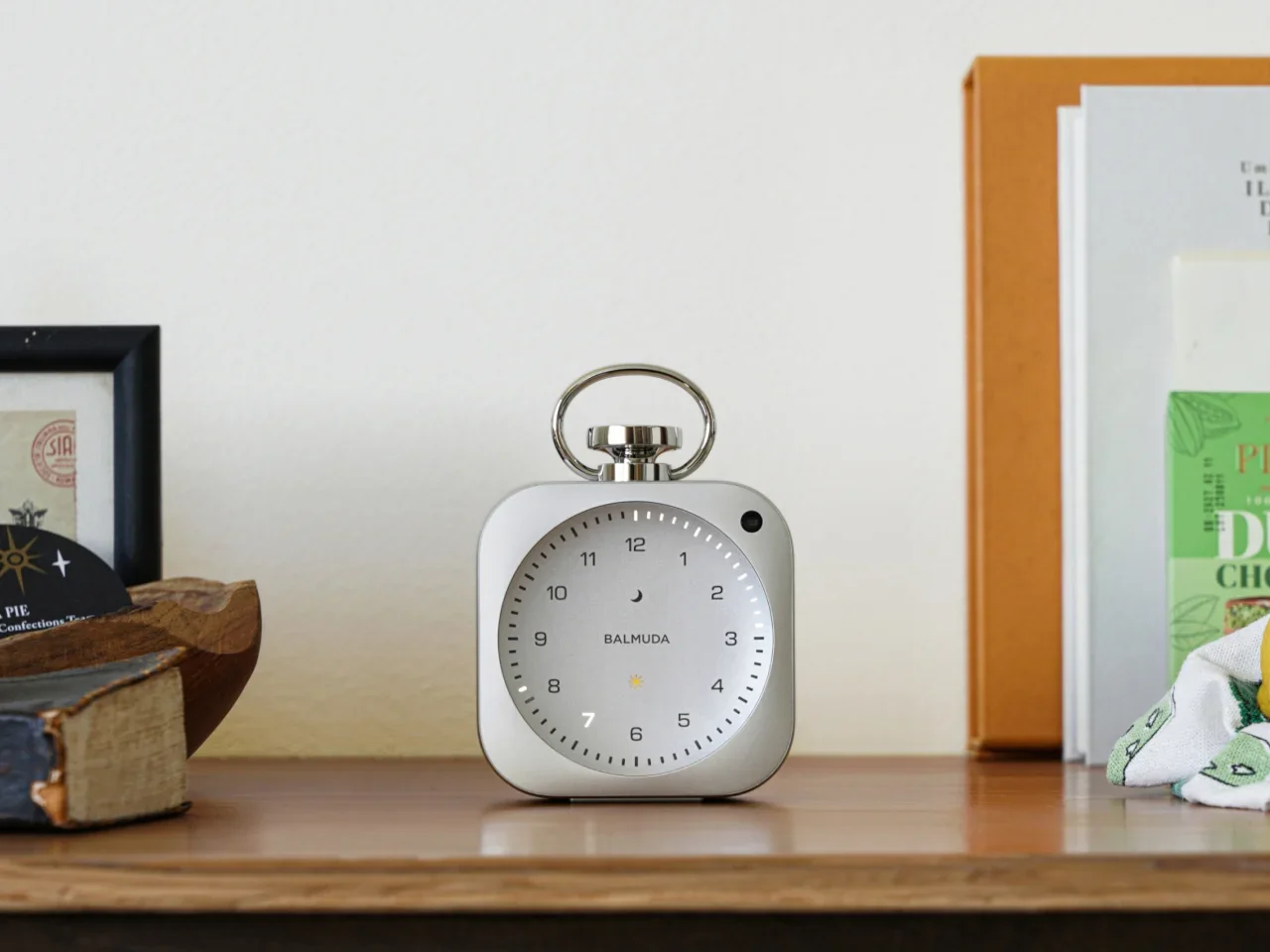
Enter The Clock. Designed by Balmuda — the Tokyo-based studio behind some of the most considered kitchen and home objects of the last decade — in collaboration with LoveFrom, the design firm of Jony Ive, the man who gave us the iMac, the iPhone, and the particular feeling of holding something that was made with actual intention. The Clock is the most compelling argument for a phone-free nightstand that has ever been machined from a solid block of aluminum, and it tells time with light.
There are no hands. Instead, The Clock uses what Balmuda calls a "Light Hour" display — a slow, pendulum-like glow that moves across a numbered dial modeled on vintage pocket watches. The design team, not content to simply animate a clock face, actually visited the Foucault pendulum at Japan's National Museum of Nature and Science to study the movement before settling on the animation. That is the kind of detail that separates objects from objects of meaning. You glance at it the way you glance at a candle — not to extract information urgently, but to register that time is moving, gently, and you are in your home, and everything is fine.
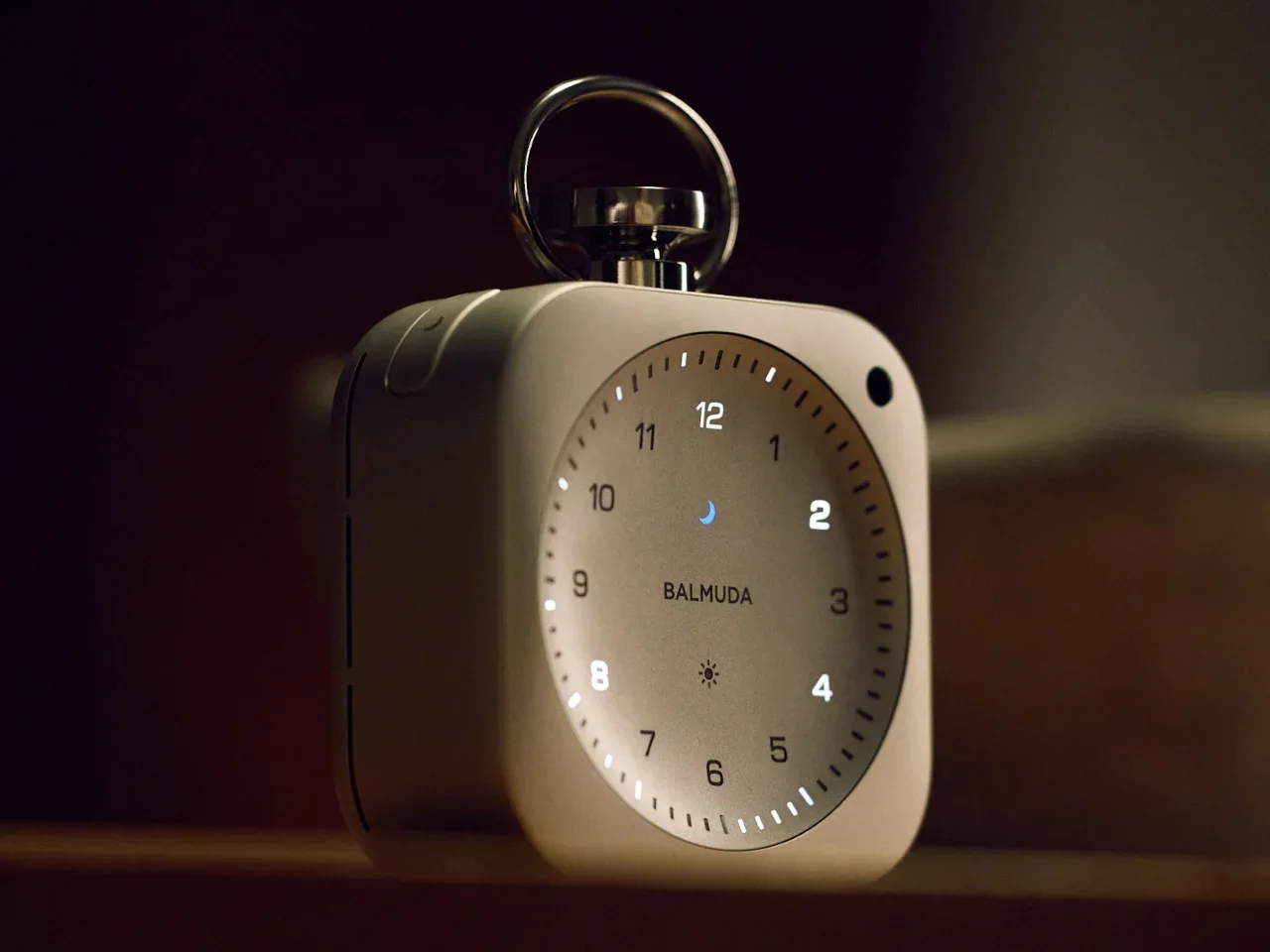
The Clock has three modes, and each one is doing real work. Relax Time plays one of seven original ambient soundscapes — rain against glass, a crackling lodge fireplace, a river moving somewhere in the distance, crickets — all recorded and produced in-house with outside musicians. The moving light dims and glows in sync with the audio, and the effect is, reportedly, less "spa playlist" and more "the world slowing down for you specifically." The Focus Timer gives you one to sixty minutes of white noise for deep work, desk-side, the kind of uninterrupted concentration that feels increasingly rare. And the Alarm — and this is the part that might genuinely change your relationship with mornings — does not blast you awake. It begins the ambient sounds three minutes before the set time, volume rising so slowly and gently that you are already half-conscious and calm by the time the alarm fully sounds. This is not a feature. This is a philosophy.
The origin story, for those who love a good one, is extremely human. Balmuda CEO Gen Terao had been playing rain sounds on his tablet to fall asleep. It worked, mostly. But the tablet's screen glowed. And Terao found himself lying awake next to a device that could, at any moment, show him an email, a news alert, a thing he did not need to see at midnight. So he built a single-purpose object to solve a single-purpose problem: help him sleep, wake him kindly, and keep his phone in another room. The Clock is the answer to his own insomnia, and it happens to be beautiful.
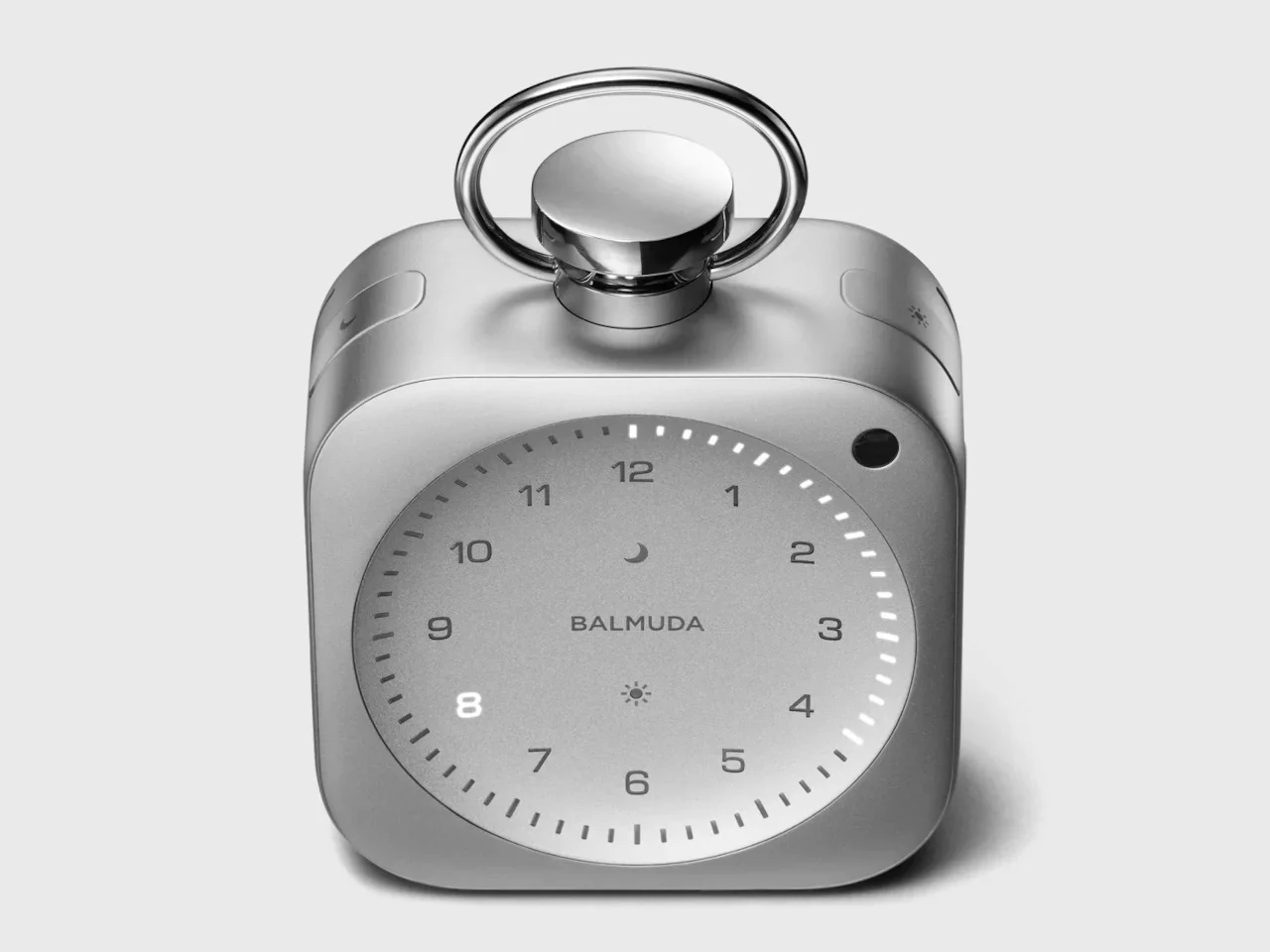
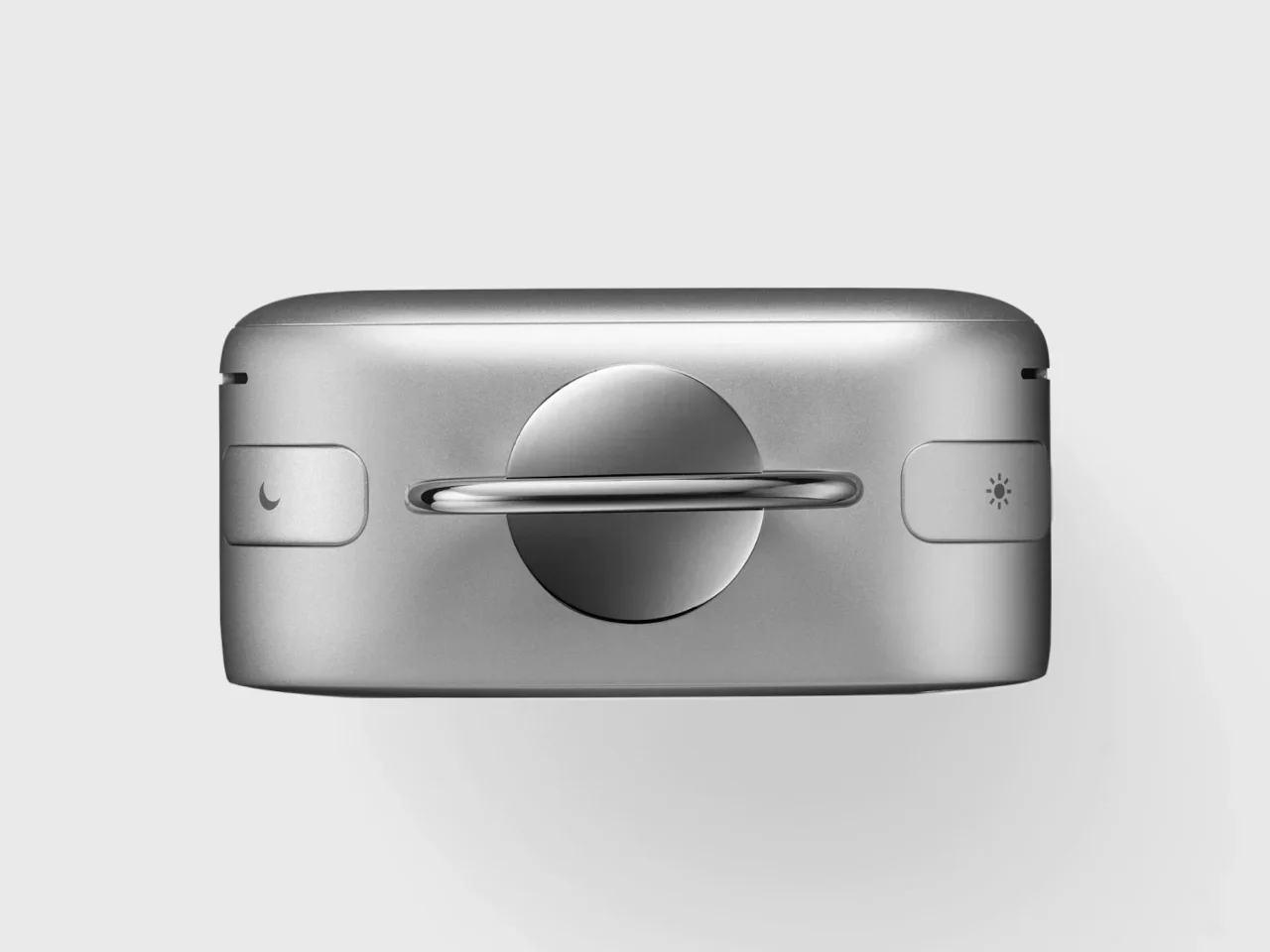
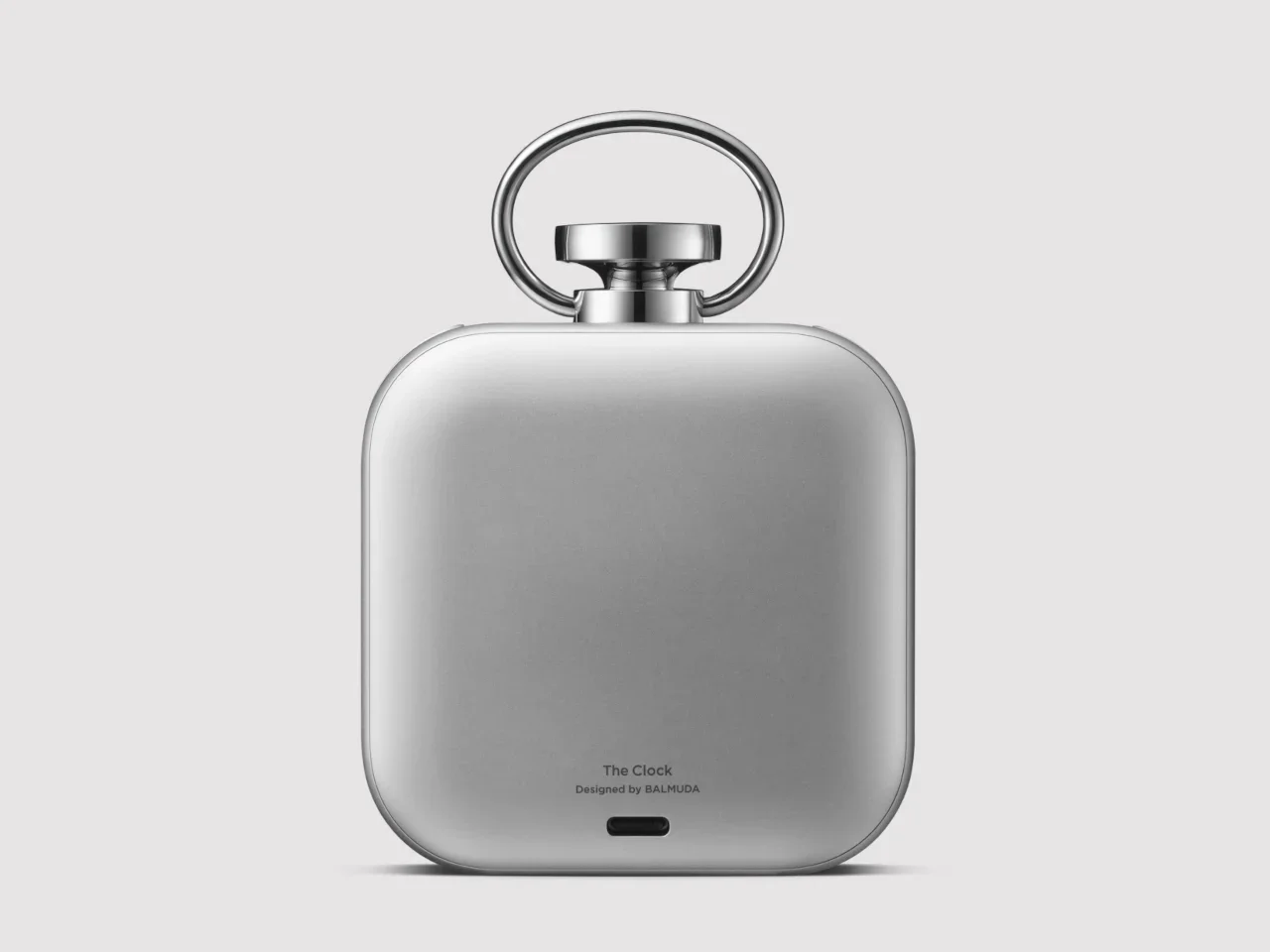
At $373, it is a considered purchase — not a spontaneous one, but not an unreasonable one either. Think of it the way you think about a good knife, or a linen duvet, or the cast-iron pan you finally bought because the flimsy one was making you feel bad about yourself every Tuesday night. These are objects that earn their place. The Clock is 7.5 centimeters square, weighs about half a pound, charges via USB-C, and comes in a cloth carrying bag for travel — because the kind of person who buys this is absolutely bringing it to the hotel. It lives on your nightstand the way a great carafe of water does, or a stack of books you actually intend to read. It is domestic in the best sense: quiet, purposeful, and there for you.
The Jony Ive connection is not incidental. Ive is the designer who, more than perhaps anyone alive, understood that people form emotional relationships with objects — that the weight of a phone in your hand, the click of a lid closing, the warmth of aluminum at body temperature, are all part of the experience of a thing. LoveFrom bringing that same attention to a bedside clock is a genuine cultural moment. Not because the world needed another clock, but because the world has been waiting for someone to treat the nightstand as seriously as the living room, the kitchen, the entryway. The bedroom is where the day actually ends and begins. It deserves something worthy of that.
The Clock launches in Japan in mid-April, with a global rollout expected to follow. The nightstand is the last frontier of intentional living. We think it just got a worthy occupant.